

By The Pixel
Consumer expectations have never been higher. In a world of mobile-first browsing, instant comparisons and AI-powered everything, retailers face a simple challenge:
Make it effortless or lose the sale.
The Pixel in conjunction with Athos Commerce ran a survey of 1,000 shoppers and here’s what the latest shopper behaviour data reveals about how people search, browse and buy online, and importantly what it means for your eCommerce strategy.
Mobile Dominates Discovery, But Desktop Still Wins Big Purchases
When searching for something to buy online:
- 64% prefer mobile
- 27% prefer desktop
- 9% prefer tablet
Mobile is clearly the starting point for most customer journeys. But here’s the nuance: When it comes to larger purchases,
- 59% switch to desktop to complete the transaction
This tells us something important: customers may discover on mobile, but they still value the perceived control, visibility and security of desktop when spending more.
Retailers need seamless cross-device experiences, not just responsive design.
Navigation Is Make-or-Break
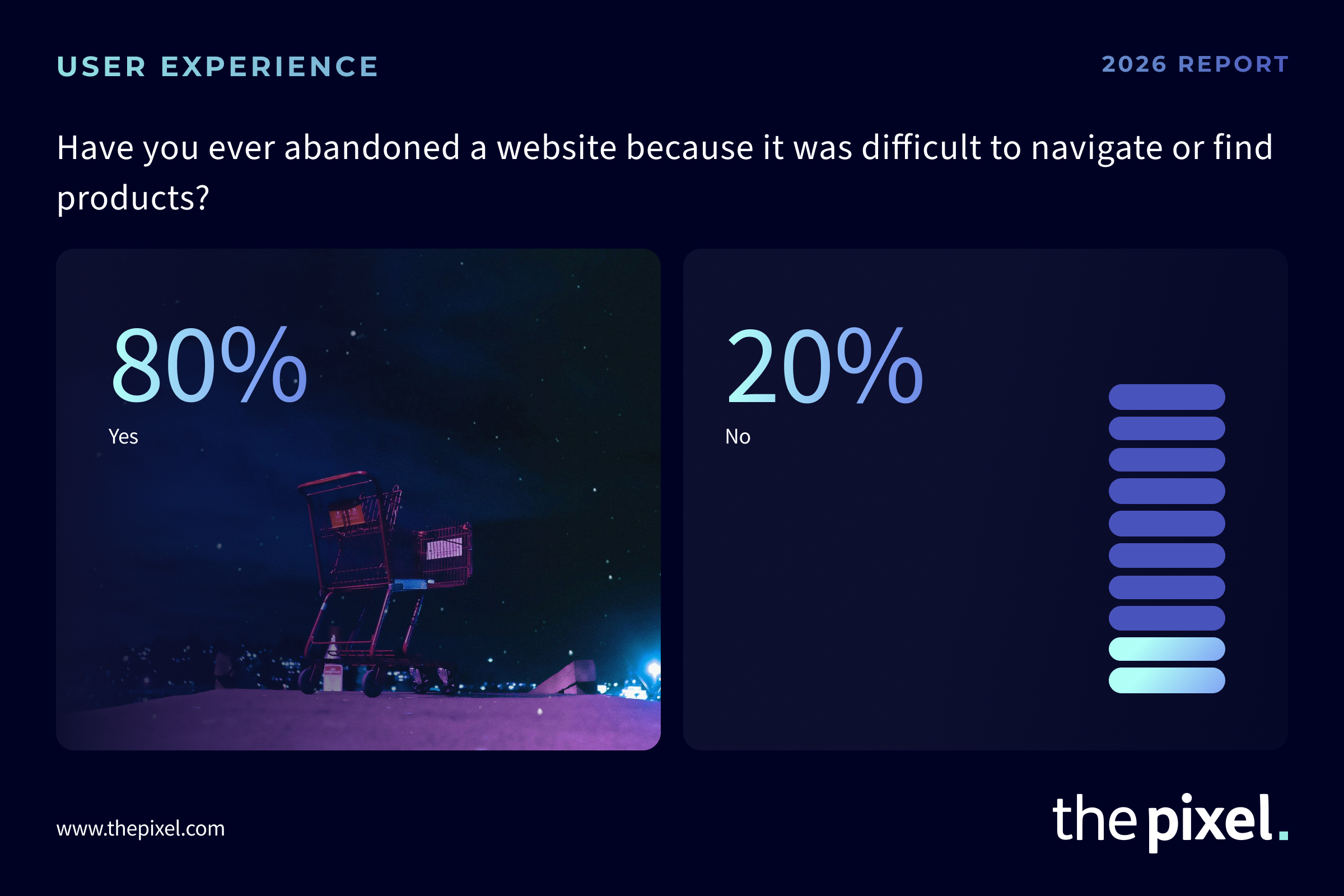
A staggering 80% of shoppers have abandoned a website because it was difficult to navigate or find products.
Only 20% say they haven’t.
That means poor UX isn’t a minor issue, it’s a revenue leak.
How Shoppers Prefer to Find Products
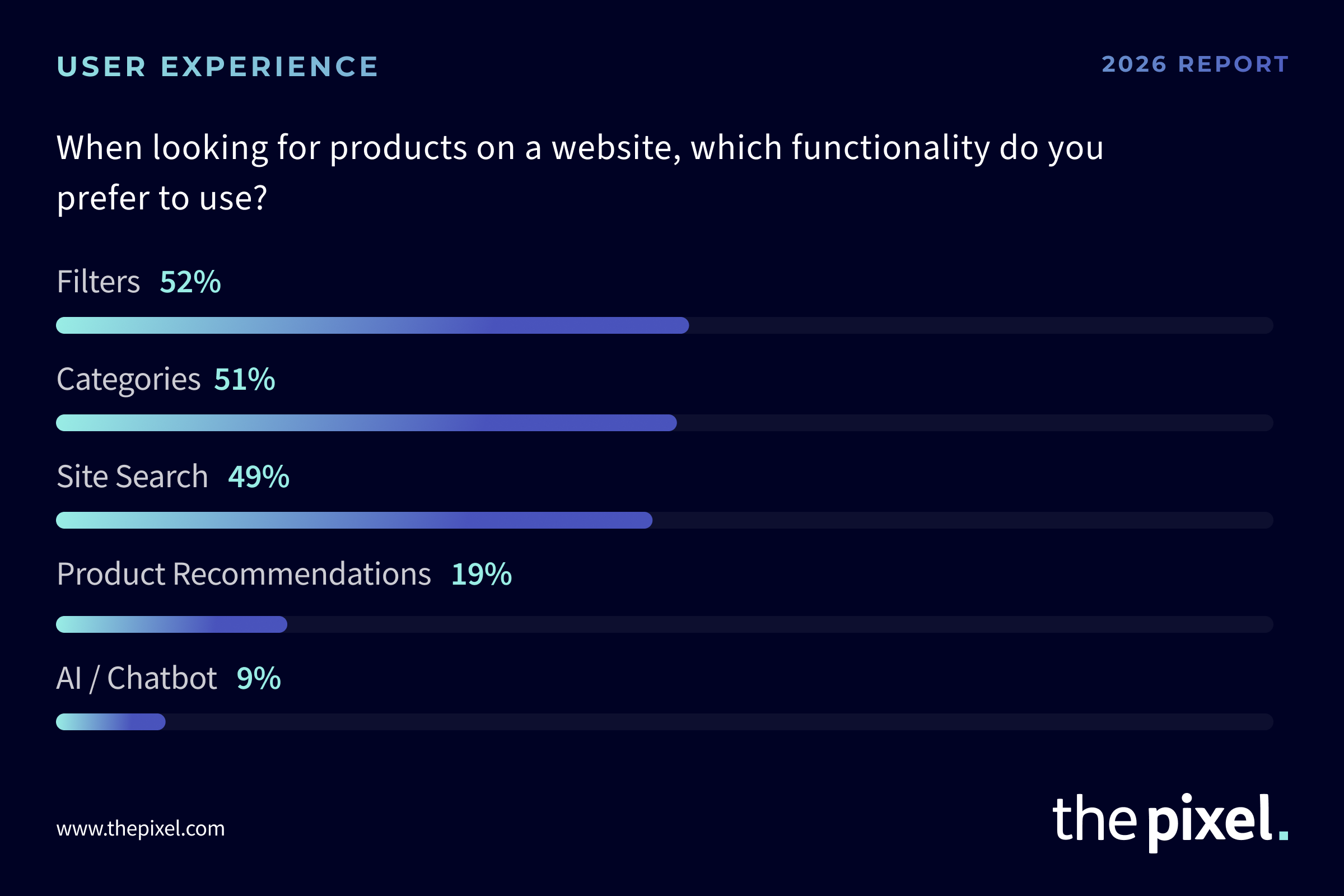
When browsing a website, customers rely on multiple tools: (multi-select answer)
- Filters – 52%
- Categories – 51%
- Site search – 49%
- Product recommendations – 19%
- AI/chatbots – 9%
The takeaway? Shoppers want control. They prefer structured browsing and clear refinement tools over conversational AI. While AI has a place, it’s not replacing core navigation anytime soon.
Site Search: A Critical Conversion Driver
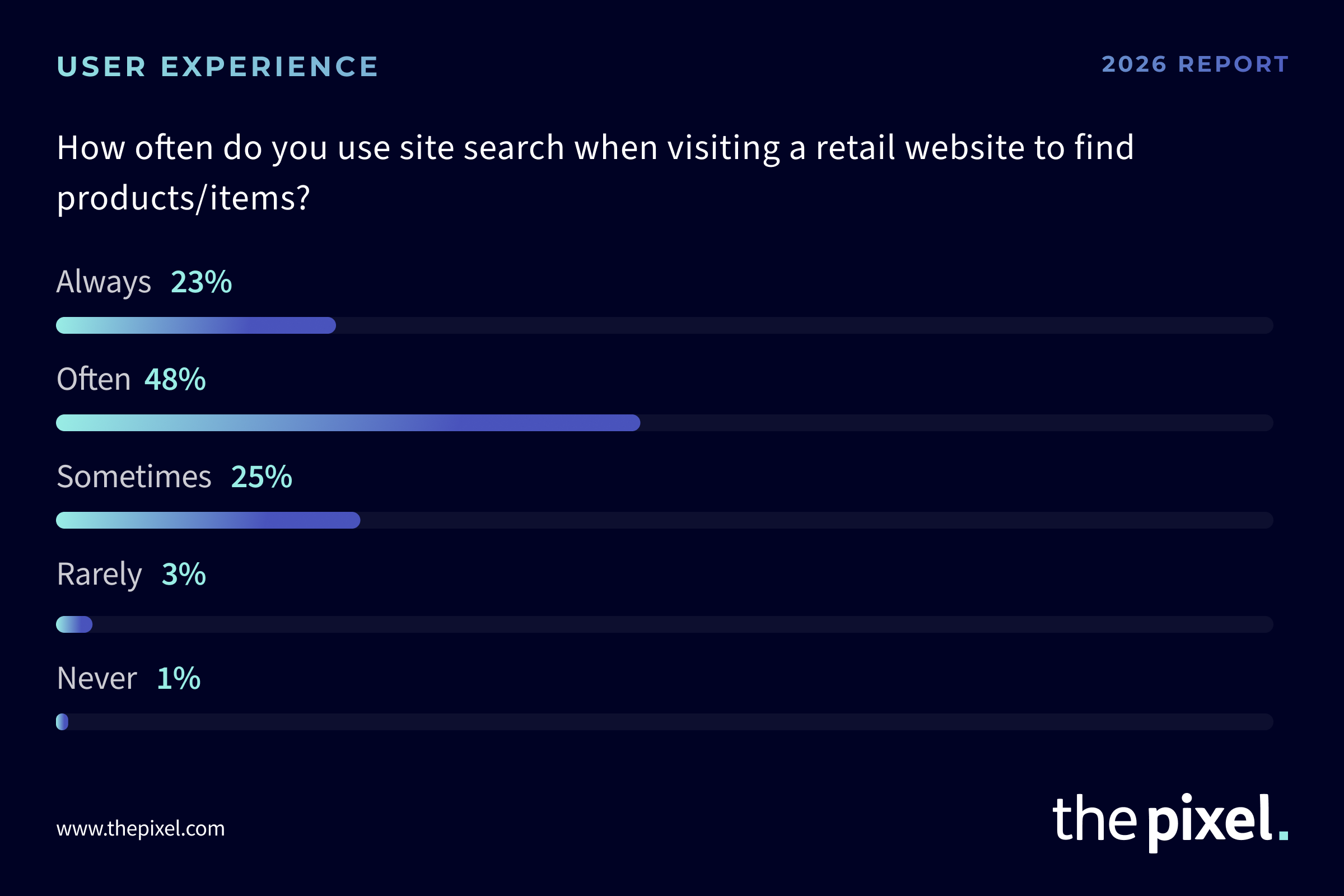
Site search plays a bigger role than many brands realise:
- 23% use it every time
- 48% use it often
- 25% use it sometimes
- 3% rarely
- 1% never
That means over 70% of shoppers regularly rely on site search.
For many users, the search bar is the storefront and the key product discovery tool. If it’s inaccurate, slow, or poorly configured, conversions suffer.
What Actually Drives Purchase Decisions?
When deciding whether to buy, shoppers care most about: (multi-select)
- Price – 79%
- Reviews – 60%
- Product description – 52%
- Product photos – 43%
- Delivery time – 37%
- Delivery & returns info – 34%
- Brand reputation – 33%
Price may dominate, but trust signals (reviews, clear descriptions, transparency) are close behind.
Biggest Online Shopping Frustrations
The most common pain points:
- Unclear pricing or hidden costs – 21%
- Too many choices – 18%
- Confusing product information – 16%
- Hard to compare products – 16%
- Fake or unhelpful reviews – 12%
- Poor search filters – 11%
Customers don’t just want options, they want clarity especially on pricing, product information and product reviews.
What Makes Shoppers Leave Immediately?
These are instant deal-breakers: (multi-select)
- Too many pop-ups – 59%
- Slow loading – 47%
- Doesn’t feel trustworthy – 46%
- Poor images – 38%
- High delivery costs – 37%
- Price seems suspiciously high/low – 37%
- Lack of reviews – 35%
- Confusing layout/navigation – 31%
- Lack of product information – 25%
Pop-ups and slow performance top the list – a reminder that aggressive conversion tactics often do the opposite.
Are Product Recommendations Important?
Product recommendations (“You may also like”) matter, but they’re not universal:
- Very important – 23%
- Important – 31%
- Somewhat important – 24%
- Not important – 22%
That means over half of shoppers value them, but they’re secondary to strong navigation, search and product clarity.
What This Means for Retailers
If we step back, a few themes emerge:
- Make Mobile Exceptional. It’s the primary discovery channel.
- Optimise Desktop for High-Value Purchases. Confidence matters when spending more.
- Fix Navigation Before Adding AI. Filters, categories and site search drive real behaviour.
- Importance of Site Search . It’s not a feature, it’s a conversion engine.
- Remove Friction. Pop-ups, slow pages, hidden costs and confusing layouts cost sales.
Final Thought
Customers aren’t asking for revolutionary experiences.
They’re asking for:
- Speed
- Clarity
- Trust
- Control
Brands that deliver those fundamentals consistently will outperform regardless of trends.
Please contact [email protected] if you would like to receive a full copy of the product discovery survey across UX, paid search, social commerce and AI.
Published 11/03/26
