

By Aynsley Peet, Head of Growth at The Pixel
Social media has firmly established itself as one of the most influential channels for product discovery. Whether it’s a recommendation from a creator, a product review, or a targeted advert, consumers are increasingly turning to social platforms to find new brands and products.
To better understand today’s social commerce landscape, we surveyed 1,000 UK online consumers to explore how they discover products, what content influences them most, and where they go when they’re ready to buy.
Facebook still leads product discovery
While platforms like TikTok and Instagram dominate conversations around social commerce, Facebook remains the most popular social media platform for discovering new products.
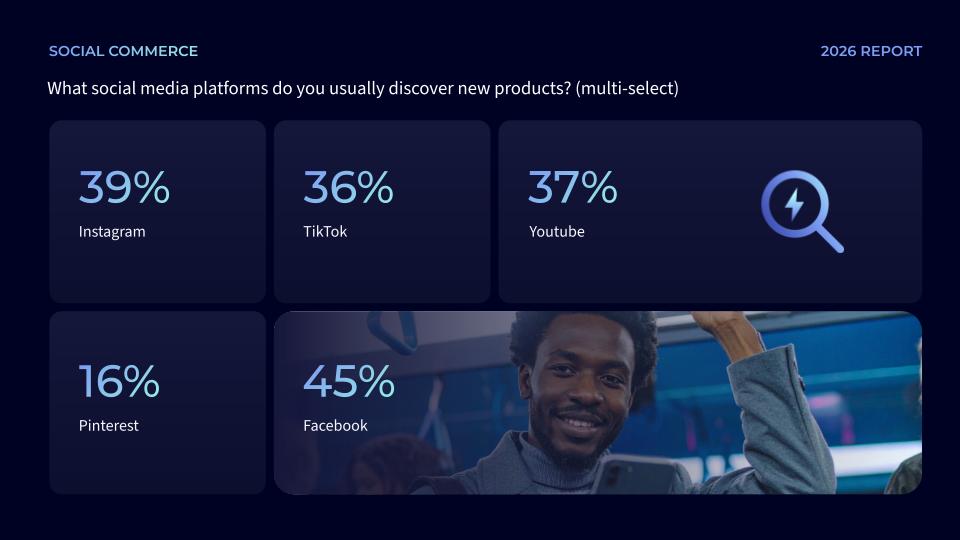
When asked which social media platforms they usually discover new products on, consumers responded:
- Facebook – 45%
- Instagram – 39%
- YouTube – 37%
- TikTok – 36%
- Pinterest – 16%
- X (Twitter) – 13%
The results demonstrate that product discovery is spread across multiple platforms, reinforcing the need for brands to build an omnichannel social strategy rather than relying on a single network.
Social media has become a regular discovery channel
Product discovery through social media is no longer an occasional event.
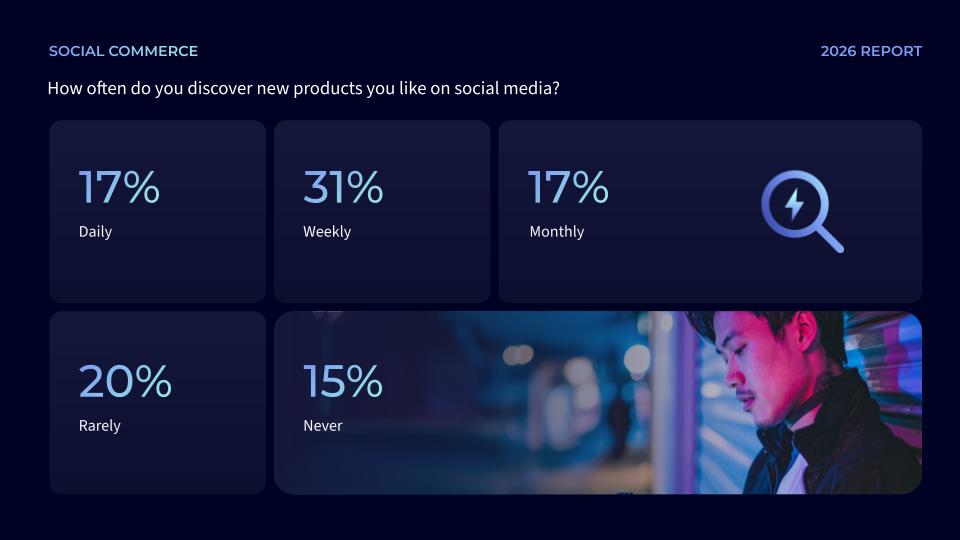
Nearly half of consumers discover products either daily or weekly:
- 17% discover products every day
- 31% discover products every week
- 17% every month
- 20% rarely
- 15% never
For retailers, this highlights the growing importance of maintaining a consistent presence with engaging content that keeps products visible throughout the customer journey.
Discovery doesn’t mean immediate purchase
One of the most interesting findings is what consumers do after discovering a product on social media.
Rather than purchasing immediately, most continue researching before making a buying decision.
When asked where they normally go next after discovering a product:
- 45% visit the brand’s website
- 40% check Amazon
- 38% use Google or Bing
- 18% rarely follow up
- 8% purchase directly through the social platform
- 6% visit another social platform
Despite growing investment in in-app shopping, only a small proportion of consumers complete purchases directly within social media platforms.
Instead, most continue their journey elsewhere often comparing prices, reading reviews or learning more about the brand.
This reinforces the importance of ensuring your website, search visibility and marketplace presence are aligned with your social campaigns.
Reviews beat influencers
While influencer marketing continues to attract significant investment, consumers place greater value on authentic product information.
The types of content most likely to drive product discovery were:
- Product reviews – 27%
- Advertisements – 24%
- Friends’ posts – 12%
- Influencer recommendations – 12%
- User-generated content – 8%
- Tutorials and demonstrations – 7%
Consumers appear to be looking for credibility over celebrity.
Independent reviews, genuine recommendations and informative content continue to outperform more promotional formats.
Social media drives real purchases
Product discovery is translating into sales.
When asked whether they had ever purchased a product they first discovered on social media:
- 22% said frequently
- 38% said occasionally
- 18% said rarely
- 22% said never
That means 60% of UK consumers have purchased a product they originally discovered on social media at least occasionally.
This confirms social media has become a meaningful contributor to online revenue, not simply an awareness channel.
What this means for retailers
The findings point to several priorities for brands looking to maximise the value of social commerce:
- Treat social media as a product discovery engine rather than simply an advertising platform.
- Optimise your website experience, as it remains the primary destination after social discovery.
- Invest in authentic product reviews and credible content that builds trust.
- Ensure search and marketplace listings support your social campaigns, as many consumers continue researching before purchasing.
- Measure the full customer journey, recognising that discovery often happens on one platform while conversion takes place elsewhere.
The bottom line
Social media has become one of the UK’s most influential product discovery channels, with consumers regularly finding new brands across Facebook, Instagram, YouTube and TikTok.
However, the purchase journey rarely ends within social media itself. Most shoppers continue their research via brand websites, search engines or marketplaces before making a decision.
For retailers, success in social commerce isn’t simply about generating clicks—it’s about creating a connected customer journey that supports consumers from initial discovery through to purchase.
Brands that combine engaging social content with strong digital experiences, trusted reviews and seamless ecommerce journeys will be best placed to convert discovery into revenue.
Please contact [email protected] if you would like to receive a full copy of the product discovery survey across UX, paid search, social commerce and AI.
Published 07/08/2026
