
11 Mar 2026
What Todays Online Shoppers Really Want (And Why Most Websites Get It Wrong)

By The Pixel
Consumer expectations have never been higher. In a world of mobile-first browsing, instant comparisons and AI-powered everything, retailers face a simple challenge:
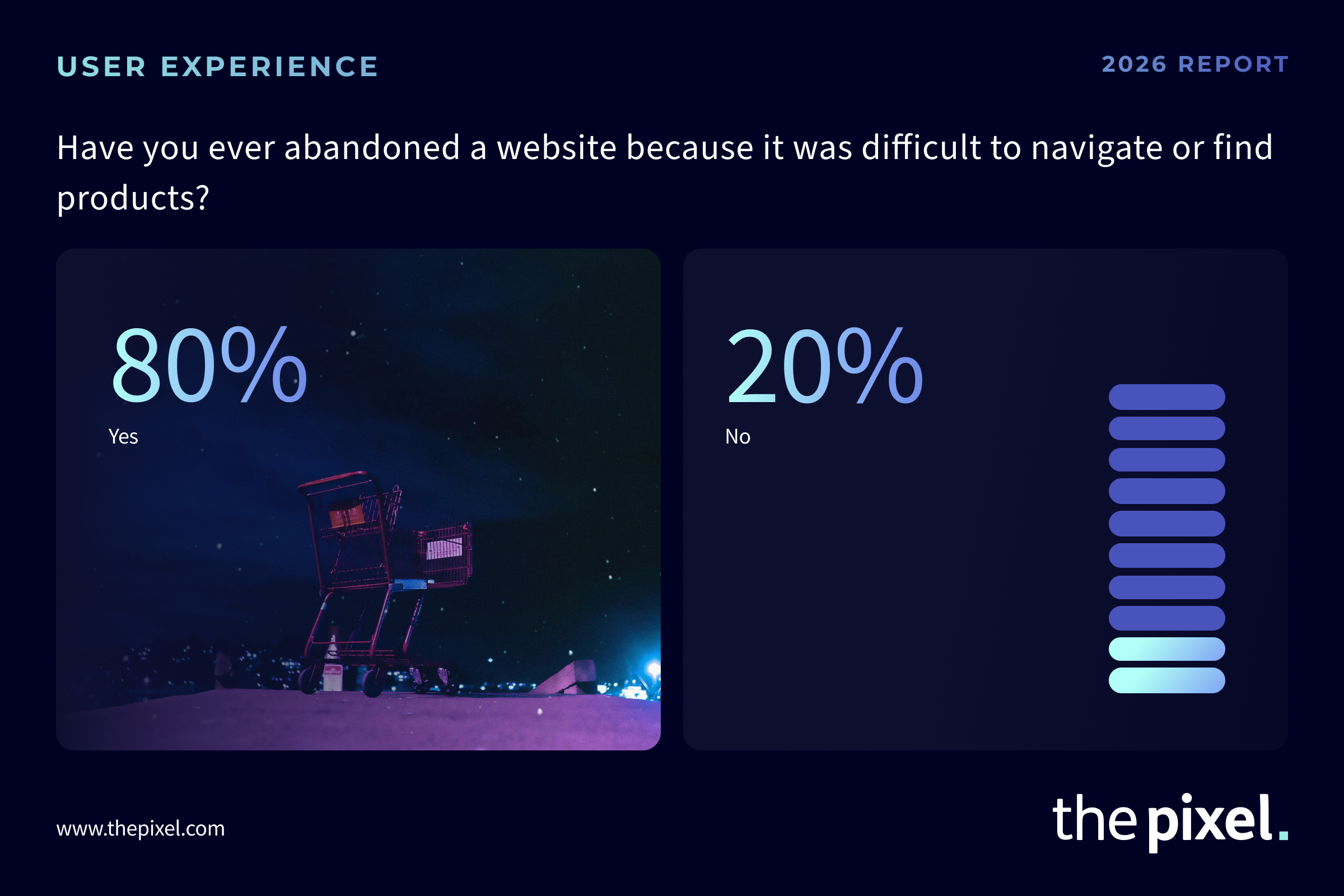 A staggering 80% of shoppers have abandoned a website because it was difficult to navigate or find products.
Only 20% say they havent.
That means poor UX isnt a minor issue, its a revenue leak.
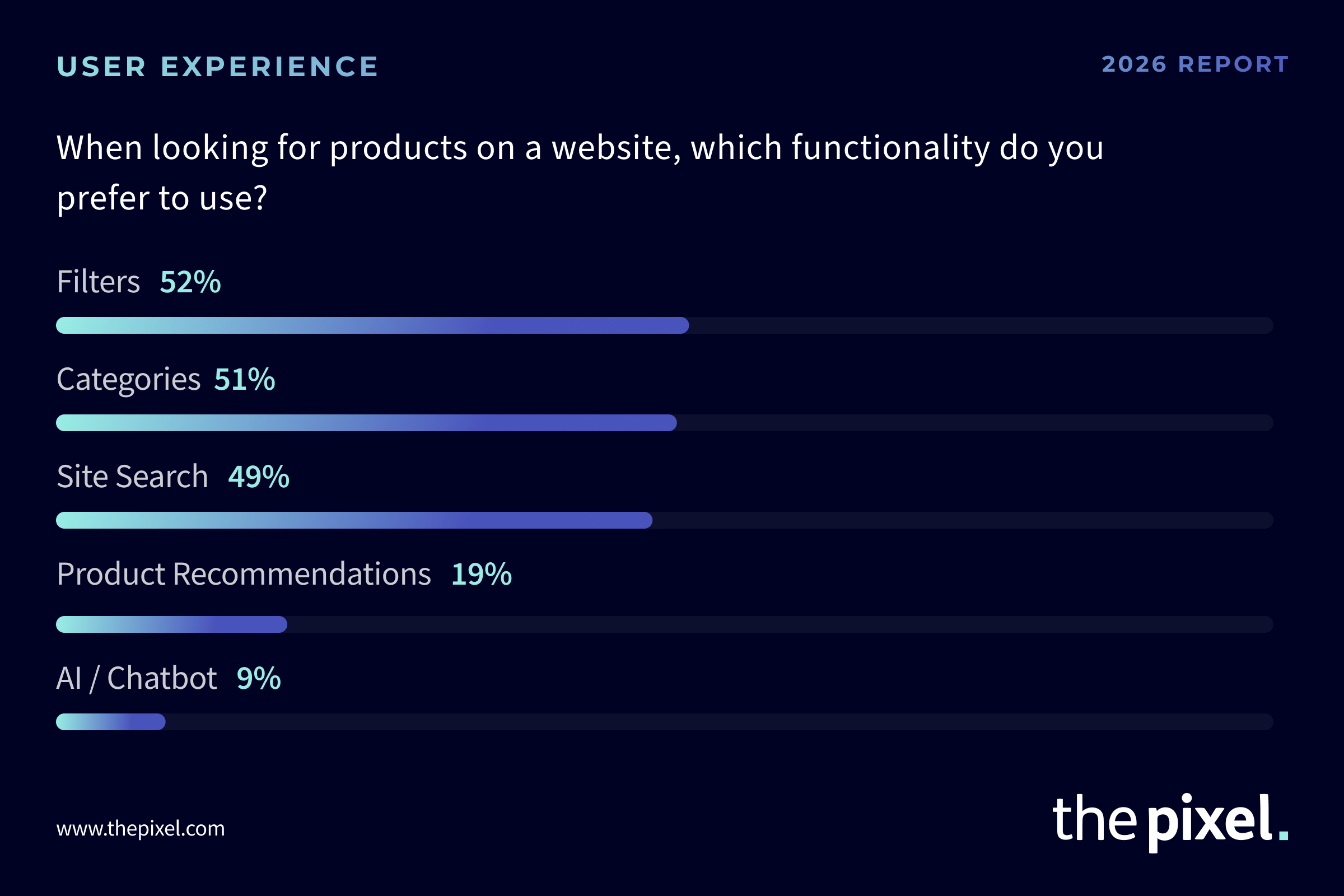 When browsing a website, customers rely on multiple tools: (multi-select answer)
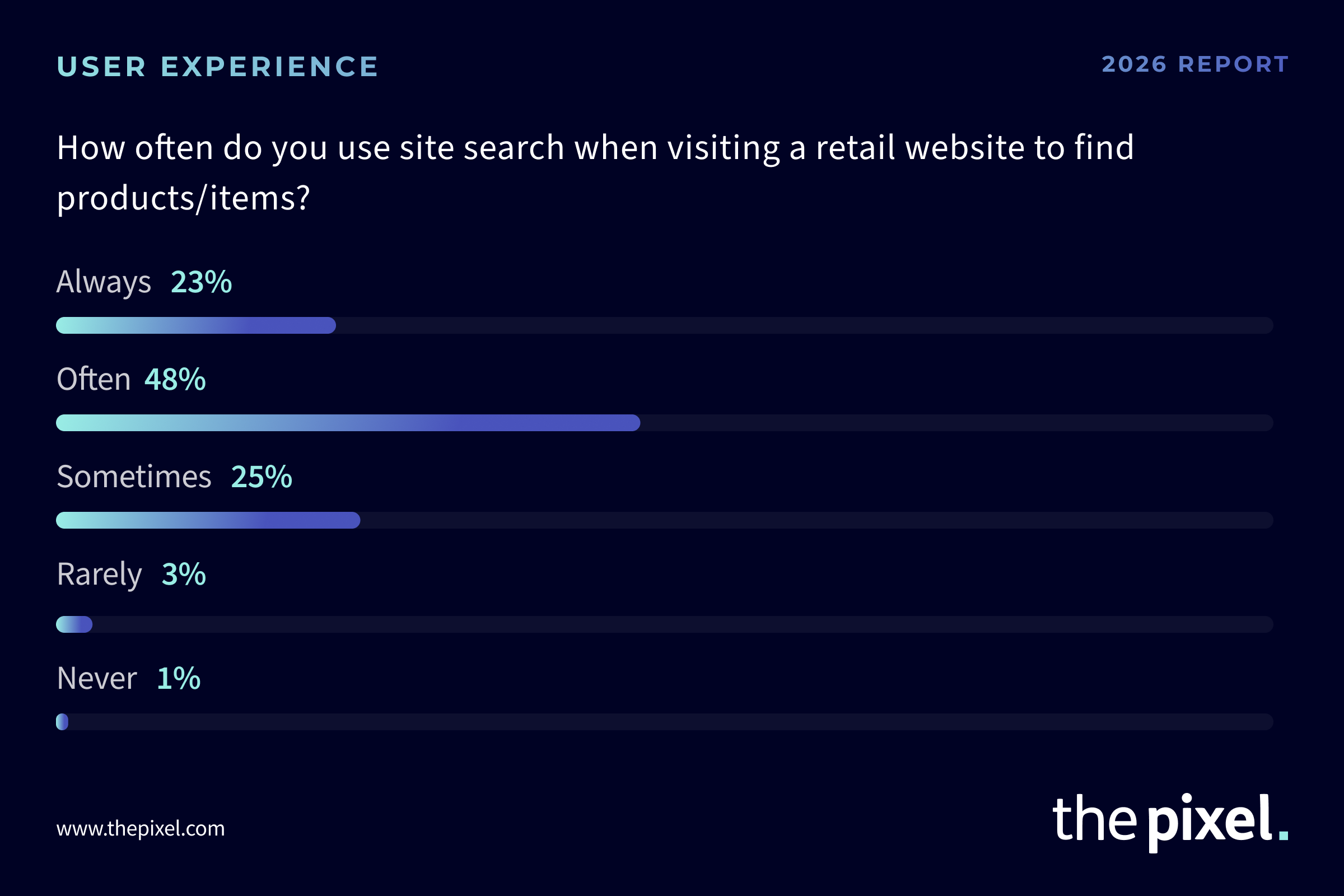 Site search plays a bigger role than many brands realise:
Make it effortless or lose the sale.
The Pixel in conjunction with Athos Commerce ran a survey of 1,000 shoppers and heres what the latest shopper behaviour data reveals about how people search, browse and buy online, and importantly what it means for your eCommerce strategy.Mobile Dominates Discovery, But Desktop Still Wins Big Purchases
When searching for something to buy online:- 64% prefer mobile
- 27% prefer desktop
- 9% prefer tablet
- 59% switch to desktop to complete the transaction
Navigation Is Make-or-Break
A staggering 80% of shoppers have abandoned a website because it was difficult to navigate or find products.
Only 20% say they havent.
That means poor UX isnt a minor issue, its a revenue leak.
How Shoppers Prefer to Find Products
When browsing a website, customers rely on multiple tools: (multi-select answer)
- Filters - 52%
- Categories - 51%
- Site search - 49%
- Product recommendations - 19%
- AI/chatbots - 9%
Site Search: A Critical Conversion Driver
Site search plays a bigger role than many brands realise:
- 23% use it every time
- 48% use it often
- 25% use it sometimes
- 3% rarely
- 1% never
What Actually Drives Purchase Decisions?
When deciding whether to buy, shoppers care most about: (multi-select)- Price - 79%
- Reviews - 60%
- Product description - 52%
- Product photos - 43%
- Delivery time - 37%
- Delivery & returns info - 34%
- Brand reputation - 33%
Biggest Online Shopping Frustrations
The most common pain points:- Unclear pricing or hidden costs - 21%
- Too many choices - 18%
- Confusing product information - 16%
- Hard to compare products - 16%
- Fake or unhelpful reviews - 12%
- Poor search filters - 11%
What Makes Shoppers Leave Immediately?
These are instant deal-breakers: (multi-select)- Too many pop-ups - 59%
- Slow loading - 47%
- Doesnt feel trustworthy - 46%
- Poor images - 38%
- High delivery costs - 37%
- Price seems suspiciously high/low - 37%
- Lack of reviews - 35%
- Confusing layout/navigation - 31%
- Lack of product information - 25%
Are Product Recommendations Important?
Product recommendations (You may also like) matter, but theyre not universal:- Very important - 23%
- Important - 31%
- Somewhat important - 24%
- Not important - 22%
What This Means for Retailers
If we step back, a few themes emerge:- Make Mobile Exceptional. Its the primary discovery channel.
- Optimise Desktop for High-Value Purchases. Confidence matters when spending more.
- Fix Navigation Before Adding AI. Filters, categories and site search drive real behaviour.
- Importance of Site Search . Its not a feature, its a conversion engine.
- Remove Friction. Pop-ups, slow pages, hidden costs and confusing layouts cost sales.
