09 Dec 2019
Black Friday 2019 - What did we learn?
By Jason Fagan
The Black Friday and Cyber Monday weekend is one of the most significant shopping events of the year and early reports are implying that 2019s event was a lucrative one for retailers. In this blog, we take a look at the results and what we learned from Black Friday and Cyber Monday 2019.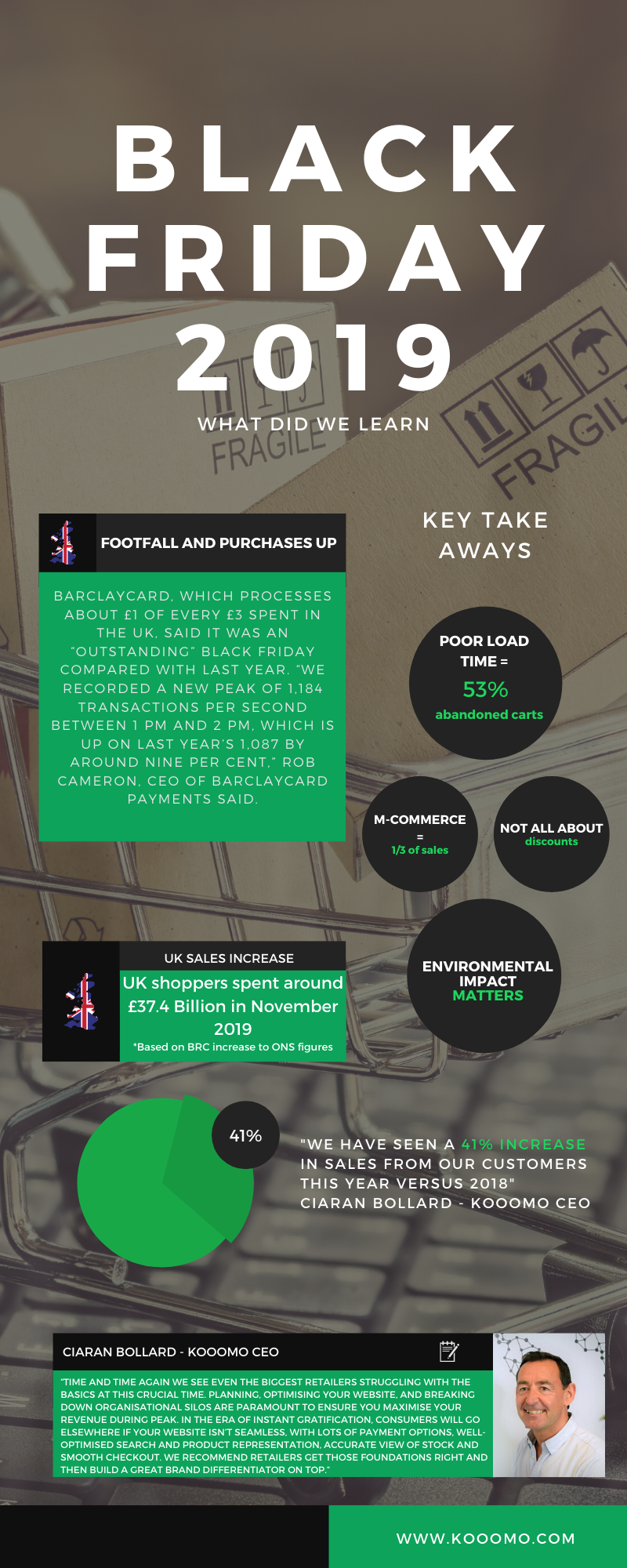
Footfall and purchases were up in the UK
Barclaycard, which processes about £1 of every £3 spent in the UK, said it was an outstanding Black Friday compared with last year. We recorded a new peak of 1,184 transactions per second between 1 pm and 2 pm, which is up on last years 1,087 by around 9%, Rob Cameron, CEO of Barclaycard Payments said. The payment company said transaction value was up 16.5% compared with last year, with the volume of transactions up 7.2% overall. Once again Black Friday has continued to be a fantastic opportunity for retailers and consumers, they continued. This positive news is echoed by Springboard, which measures footfall data. Springboard found that shopper numbers increased 3.3% as shoppers looked to make the most of the high concentration of Black Friday discounts. The UK data was in contrast to the US: data by Shoppertrak saw a fall in footfall in the US, likely driven by the move from a single to a multi-day event. In the UK the coincidence of Black Friday with the nations payday is likely to be the reason for the increased spend. In Ireland, while the post-event data isnt out yet, PwC Ireland was predicting big-spending, particularly on Christmas gifts. Ciaran Bollard, CEO of Kooomo, which is the eCommerce platform for Morrisons, Mothercare and many more, says: It seems that the UK took a break from worrying about Brexit, and early figures from the British Retail Consortium (BRC) and Barclaycard show that consumer confidence is rising. UK and Irish retailers can take some comfort from this heading into the holiday season. Of course, the proof will be in peak returns week, but accurate representation of stock online via descriptions and images will help mitigate this.
The rise of the alternative take
2019 is the year of the ethical consumer, as the younger generations purchasing power comes into force. Nearly two-thirds (61%) of consumers say theyre thinking more carefully about the environmental impact of their Black Friday/Cyber Monday purchases according to KPMG research. With consumers increasingly concerned about the impact of fast fashion on the environment, getting them to buy things they otherwise wouldnt is becoming less of a sustainable strategy for retail. Smart businesses have long recognised that, as social attitudes change, the way to continued success wont be selling more products, but better ones “ and adding value by providing services that are designed to bring human benefits without significant environmental costs. This year, we saw a distinct shift towards not discounting at all (such as Deciem), offering alternative discounts such as free shipping at Cath Kidston, or participating in #GreenFriday, #GivingFriday or #SmallBusinessFriday. Food delivery app Just Eat teamed up with FoodCycle to raise money for meals, which will aid the hungry and in need. Shoe brand Allbirds ceased all in-store trading in the UK. Instead of simply closing stores, it removed all products from shelves and used its store space to host free workshops and live music events. And anti-Black Friday stalwart Patagonia matched all donations by its customers to its Action Works platform. As Bollard continues: Retailers cant ignore Black Friday and Cyber Monday, but increasingly environmental and ethical concerns matter to customers. Weve seen some of the best success with our customers when they combine transactional retail with standing for something as their brand or offering experiences. The Black Friday/Cyber Monday weekend is a great opportunity to promote that differentiation. We have seen a 41% increase in sales from our customers this year versus 2018.